Global ecommerce sales are projected to reach around 6.88 trillion dollars in 2026, up from approximately 6.42 trillion dollars in 2025, with online sales expected to keep increasing their share of total retail over the next few years. In this environment, merchants are under pressure to run lean operations while still delivering fast, personalized, and seamless experiences across channels.
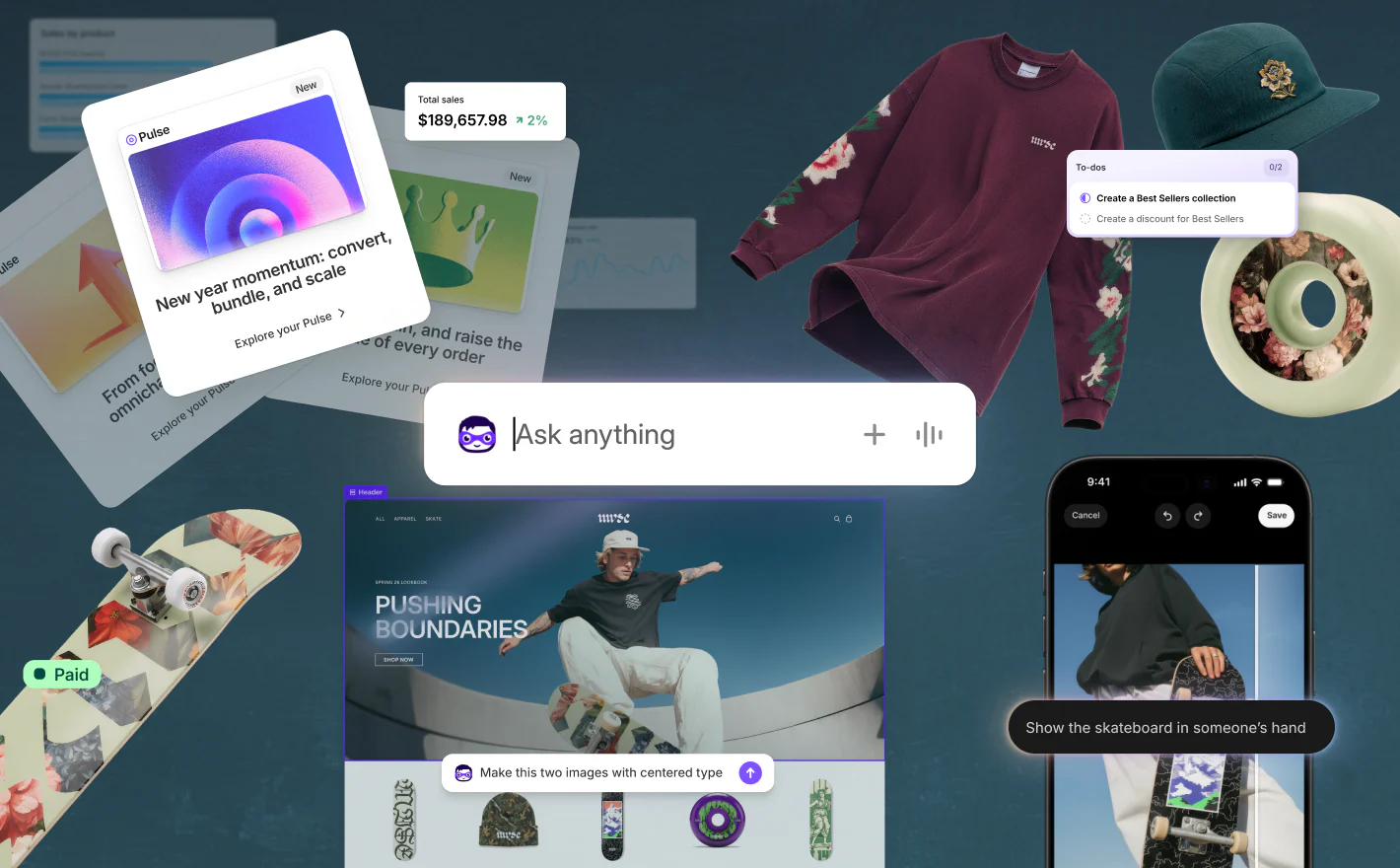
Shopify’s Winter Edition 2026, branded as the “Renaissance Edition,” responds to this pressure with more than 150 improvements that make commerce AI native by default. From Sidekick’s evolution into a true AI coworker to agentic storefronts that surface your catalog inside AI chats, and from 2,048 product variants to smarter B2B tools and developer APIs, Shopify is positioning itself as the platform for experimentation, automation, and rapid iteration in 2026. For brands, agencies, and developers, understanding these updates is critical to staying ahead of competitors over the coming year.
The Renaissance Edition: Big Themes
Shopify frames Winter ’26 as the start of a commerce renaissance, with three main pillars: AI and agentic commerce, operational efficiency, and faster building across web, retail, and headless environments. The edition’s branding and messaging emphasize a shift from traditional manual workflows to systems that anticipate needs, simulate outcomes, and act autonomously under merchant control.
This release also continues Shopify’s strategy of twice yearly Editions that ship platform wide improvements instead of isolated features. Many Winter ’26 updates build on foundations laid in earlier releases, such as the Horizons Summer ’25 edition, by deepening AI capabilities, expanding APIs, and tightening integration between storefront, checkout, and back office operations.
Sidekick Evolves into an AI Coworker
Sidekick, Shopify’s AI assistant, has evolved from a basic help bot into a practical AI coworker deeply integrated into the admin and developer workflow. In Winter ’26, Sidekick can help draft pages, generate theme sections, configure settings, and in some cases even scaffold custom app logic, which reduces the time required for non technical merchants to execute complex tasks.
For developers and agencies, Sidekick becomes a collaborator rather than a replacement, handling repetitive tasks and documentation while humans focus on architecture, UX, and growth strategy. This allows teams to handle more stores or features with the same headcount, increasing margins for service providers and freeing merchants to spend more time on product and marketing.
Agentic Commerce and AI Storefronts
One of the most transformative ideas in Winter ’26 is agentic commerce, which uses AI agents and conversations as primary shopping interfaces rather than just support tools. Shopify introduces Agentic Storefronts, which allow merchants to syndicate their product data to AI platforms so that products become discoverable and purchasable inside conversational interfaces.
Practically, this means customers can browse, add to cart, and checkout directly inside AI chat experiences without leaving the conversation. Shopify is also developing controls for merchandising, brand knowledge bases, and conversation monitoring so merchants can ensure their catalog and messaging show up accurately and authentically in AI environments, which will become increasingly important as AI driven shopping grows.
SimGym: Testing Stores with AI Shoppers
SimGym is another headline feature that uses AI agents as simulated shoppers to test your store before human visitors see changes. Merchants can deploy AI shoppers that navigate the storefront, interact with product pages, and attempt to complete key journeys like add to cart, checkout, or signup flows, generating feedback and identifying friction points.
This approach effectively gives merchants an automated usability lab, helping them validate new layouts, copy, or merchandising strategies without risking real revenue during experiments. For agencies and developers, SimGym becomes a powerful tool to prove the impact of UX changes, optimize funnels faster, and deliver data backed recommendations to clients.
Rollouts: Safer Experiments and A/B Testing
The new Rollouts app plays a central role in helping merchants experiment safely. Rollouts allows teams to schedule, progressively roll out, and test storefront changes without relying on external experimentation tools, effectively bringing A/B testing and controlled releases into the core Shopify environment.
With Rollouts, merchants can gradually expose new designs or features to segments of traffic, monitor the impact on key metrics, and roll back quickly if performance dips. This makes it easier for brands of all sizes, not just enterprise merchants, to operate with a test and learn culture and continuously improve conversion rates and average order value.
Build and Manage Stores Faster
Winter ’26 includes multiple updates focused on building and managing stores more efficiently from the admin and theme editor. Merchants can now use inline admin tools inside the theme editor to edit products, collections, markets, and metafields without jumping between different screens, which speeds up daily merchandising work.
Shopify also adds theme generation on mobile, enabling merchants to generate, preview, and publish themes directly from the Shopify mobile app, which benefits busy founders and small teams managing stores on the go. Additionally, Shopify introduces a plugin to power carts, checkout, and ecommerce functionality on WordPress, allowing brands with content heavy WordPress sites to add Shopify’s commerce stack without a full platform migration.
Catalog and Merchandising Upgrades
Product catalog management receives significant enhancements that will matter a lot for fashion, manufacturing, and complex configurable products. The most notable change is support for up to 2,048 variants per product, which is a major improvement for stores with numerous combinations of size, color, length, material, or other attributes.
Other catalog features include Unlisted product status to hide items from search and collections while keeping them accessible via direct links, better collection duplication and exclusion rules, and improved bundle options that combine multiple attributes into a cleaner selection interface. Global unit pricing enhancements also make it easier to display per unit prices for weight, volume, or quantity across markets, which is important for regulatory compliance and customer transparency.
Marketing, Discounts, and Personalization
Winter ’26 adds tools that tighten the link between catalog, customer segments, and promotions. Merchants can configure automatic discounts targeted at specific customer groups, such as VIP segments or loyalty tiers, without needing complex workarounds or heavy reliance on custom apps.
These discount and personalization improvements integrate with Shopify’s broader AI features so that recommendations, offers, and content can be tailored more effectively at scale. For merchants, this makes it easier to run targeted campaigns that protect margin while still increasing conversion and repeat purchase rates across channels.
Checkout and Payments Enhancements
Shopify’s checkout, already a core differentiator, receives further refinement in Winter ’26. Updates include improved logic for handling discounts and validations through Shopify Functions, better support for nested cart lines useful for product add ons or bundles, and performance improvements that reduce friction at the final step of the funnel.
These checkout enhancements are designed to be compatible with both standard and more advanced use cases, including B2B flows and subscription or bundled products. For developers, expanded checkout APIs and Functions offer more flexibility in building custom rules, validation flows, and add on experiences while still leveraging Shopify’s optimized checkout infrastructure.
B2B and Wholesale Improvements
B2B ecommerce continues to grow rapidly, and Shopify is steadily improving its B2B capabilities as part of Editions releases. Winter ’26 adds refinement around pricing, accounts, and workflows tailored to wholesale buyers.
Although many B2B updates are incremental, they collectively make it easier to manage custom price lists, account specific terms, and repeat order flows directly within Shopify rather than relying on separate portals. For agencies and development firms, these improvements open more opportunities to position Shopify for mid market and enterprise B2B clients that previously needed specialized platforms.
Retail and Omnichannel Updates
Shopify’s focus on omnichannel retail continues with enhancements aimed at physical stores and unified inventory. Winter ’26 refines the retail experience by improving integrations between online and in store channels, making it easier to manage stock, fulfill orders, and maintain consistent pricing and promotions across touchpoints.
As online sales keep growing while physical retail evolves, having a single platform to manage both channels becomes more valuable. Shopify’s retail updates help merchants maintain accurate availability, support local pickup and ship from store options, and analyze performance across locations using a unified data foundation.
Headless Commerce and Hydrogen/Oxygen
Winter ’26 also brings specific updates for headless commerce via Hydrogen, Shopify’s React based framework, and Oxygen hosting. The edition includes performance improvements and new capabilities that make it easier to build custom storefronts that still plug into Shopify’s backend, checkout, and AI features.
By combining headless flexibility with AI native tooling and improved APIs, Shopify enables advanced merchants and agencies to ship differentiated experiences without sacrificing maintainability or speed. For brands that want complete control over frontend UX while leveraging Shopify’s payments, catalog, and operations stack, these enhancements reduce the cost and complexity of going headless.
Developer Tools and APIs
Developers receive several important upgrades in Winter ’26 through expanded APIs, Functions capabilities, and admin enhancements. New capabilities such as discount code rejection logic, nested cart lines, and richer catalog APIs allow more sophisticated customization under the hood while keeping merchant facing interfaces manageable.
Shopify’s developer updates highlight improvements to tooling, CLI, and integration paths that reduce friction when building apps or custom features. Combined with Sidekick’s emerging ability to assist in writing code and scaffolding apps, these updates position Shopify as an increasingly developer friendly ecosystem that still prioritizes performance and security.
How These Updates Will Shape Ecommerce in 2026
Together, the Winter ’26 updates signal a clear direction: ecommerce in 2026 will be AI native, conversation driven, and experimentation heavy. Agentic storefronts and AI syndication will push products directly into AI chat environments where customers are already asking for recommendations, changing the discovery funnel from static search to dynamic conversations.
At the same time, tools like SimGym and Rollouts will normalize constant optimization, enabling even small brands to run tests and simulations that previously required enterprise level resources. As global ecommerce climbs toward nearly 7 trillion dollars in annual sales and continues growing, merchants that adopt AI powered workflows and treat experimentation as a core discipline will be better positioned to capture market share.
Strategic Takeaways for Merchants and Agencies
For merchants, the immediate priority should be to integrate Sidekick into daily workflows, configure agentic storefront options, and use SimGym and Rollouts to reduce the risk of large changes. Focusing on catalog hygiene, variant structure, and unit pricing will ensure that AI driven merchandising and discovery work effectively across channels and markets.
For agencies, Winter ’26 is an opportunity to package new services around AI setup, agentic commerce strategy, experimentation frameworks, and headless builds on Hydrogen and Oxygen. By helping clients adopt these tools early, especially in high competition verticals like fashion, electronics, and B2B, service providers can differentiate themselves and justify higher retainers or project fees in 2026.
Conclusion: Preparing for an AI Native Commerce Era
Shopify Winter Edition 2026 marks a turning point, where AI and agentic workflows are no longer side features but the default way to run and grow an ecommerce business. With global ecommerce sales expected to continue rising in the coming years, platforms that embed intelligence, automation, and experimentation into every layer will set the pace for the industry.
For merchants, the priority in 2026 should be to move quickly from basic adoption to strategic usage of these tools, using AI to plan, test, and refine every part of the customer journey, not just generate content. Brands that embrace agentic commerce, invest in experimentation, and collaborate closely with developers and agencies to implement the new capabilities will be best positioned to thrive in an increasingly competitive, AI first ecommerce landscape. As the commerce renaissance unfolds, Shopify’s Winter ’26 Edition offers a powerful blueprint for building adaptive, resilient, and scalable online businesses.