Small and mid sized businesses are operating in an increasingly complex environment where manual processes, disconnected software, and limited visibility can significantly slow growth. According to recent industry studies, more than 65 percent of small businesses still rely on spreadsheets or legacy accounting tools to manage core operations, while over 70 percent report operational inefficiencies due to lack of system integration. As companies scale, these limitations often result in inaccurate reporting, delayed decision making, and rising operational costs.
Enterprise Resource Planning systems are no longer reserved for large enterprises. Modern cloud based ERP platforms have made advanced business management accessible to growing organizations. Among these solutions, Acumatica ERP has emerged as a strong contender for small and mid sized businesses seeking flexibility, scalability, and real time insights. This blog explores what Acumatica ERP offers, how it compares to other ERP solutions, its benefits and challenges, and whether it is the right fit for growing businesses.
What Is Acumatica ERP?
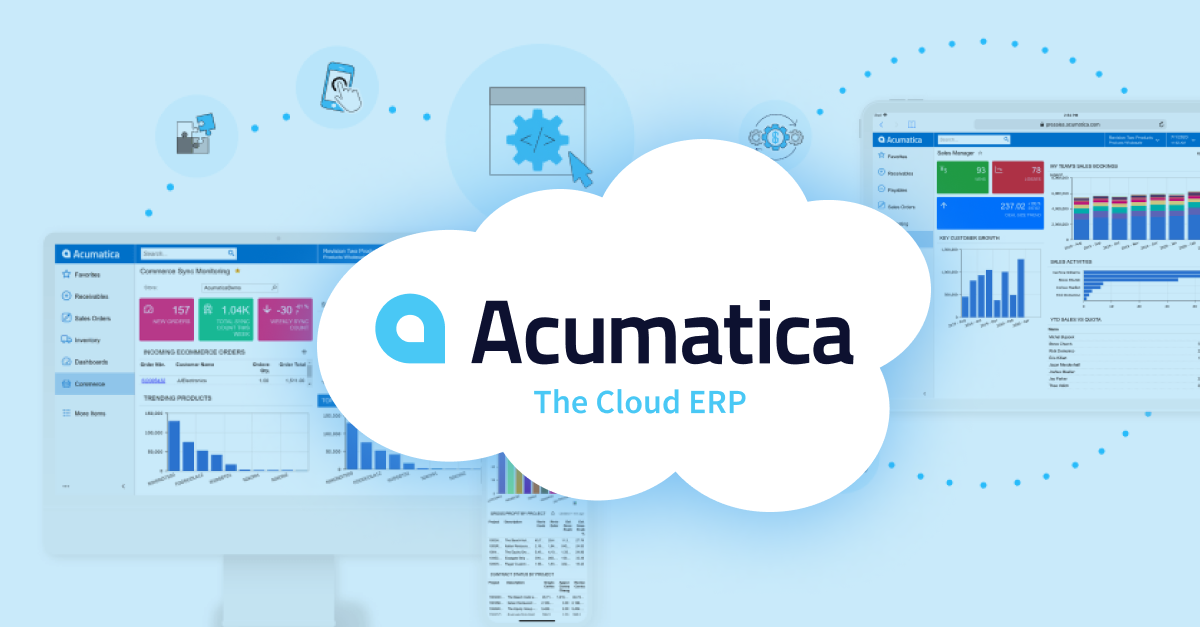
Acumatica ERP is a cloud based business management platform designed to help organizations manage financials, operations, inventory, customer relationships, and projects within a single unified system. Unlike traditional ERP systems that rely on rigid licensing models and on premises infrastructure, Acumatica operates on a modern cloud architecture that emphasizes flexibility and scalability.
The platform is known for its open architecture, role based dashboards, and seamless integration capabilities. Businesses can deploy Acumatica on public cloud, private cloud, or hybrid environments, allowing them to maintain control over data and system performance.
Acumatica is particularly popular among small and mid sized businesses across industries such as distribution, manufacturing, construction, retail, and professional services.
Why ERP Matters for Small and Mid Sized Businesses
As businesses grow, operational complexity increases. What once worked with basic accounting software or manual tracking becomes inefficient and error prone. ERP systems play a critical role in addressing these challenges.
- Improved operational efficiency through automation
- Centralized data for better decision making
- Real time financial and operational visibility
- Enhanced scalability to support growth
- Reduced manual errors and data duplication
Without a robust ERP system, businesses often struggle with fragmented data, inconsistent reporting, and limited control over operations.
Key Features of Acumatica ERP
Financial Management
Acumatica provides comprehensive financial management tools, including general ledger, accounts payable, accounts receivable, cash management, budgeting, and financial reporting. The system supports multiple currencies, tax configurations, and compliance requirements, making it suitable for businesses operating across regions.
Real time financial dashboards allow decision makers to track performance instantly and respond quickly to changing business conditions.
Inventory and Supply Chain Management
Inventory management is a critical function for distribution and manufacturing businesses. Acumatica offers advanced inventory tracking, warehouse management, demand planning, and order fulfillment capabilities.
Businesses can gain real time visibility into stock levels, reduce excess inventory, and improve order accuracy, leading to better customer satisfaction and reduced carrying costs.
Project Accounting and Job Costing
For service based and project driven organizations, Acumatica includes powerful project accounting tools. These features enable businesses to track project costs, revenues, budgets, and profitability in real time.
This functionality is especially valuable for construction companies, professional services firms, and engineering businesses that need precise cost control and project visibility.
Customer Relationship Management
Acumatica includes integrated CRM capabilities that allow businesses to manage leads, opportunities, customer interactions, and sales pipelines. By connecting CRM data with financial and operational information, organizations gain a holistic view of customer relationships.
This integration helps sales teams close deals faster while ensuring smooth handoffs between sales, finance, and operations.
Reporting and Business Intelligence
Acumatica offers flexible reporting tools and customizable dashboards. Users can create role specific dashboards that display key performance indicators relevant to their responsibilities.
Advanced reporting features enable businesses to analyze trends, monitor performance, and make data driven decisions without relying heavily on IT teams.
Scalability and Flexibility of Acumatica ERP
One of the standout advantages of Acumatica ERP is its scalability. Unlike traditional ERP systems that require costly upgrades or system replacements as businesses grow, Acumatica is designed to scale seamlessly.
Businesses can start with core modules and add functionality as needed. Whether a company expands its product lines, enters new markets, or increases transaction volumes, Acumatica can grow alongside the business without disrupting operations.
Its open architecture also allows for easy integrations with third party applications, ensuring that businesses are not locked into a closed ecosystem.
Cloud Based Advantages for Growing Businesses
- Reduced upfront infrastructure costs
- Automatic updates and system maintenance
- Remote access from any device
- Improved data security and disaster recovery
- Faster deployment compared to on premises systems
These benefits make Acumatica particularly attractive to organizations looking to modernize their operations without heavy IT investments.
Acumatica ERP Implementation Considerations
While Acumatica offers powerful capabilities, successful deployment depends on careful planning and execution. Acumatica ERP implementation involves more than just installing software. It requires aligning business processes, training users, and ensuring data accuracy.
- Business process mapping and optimization
- Data migration from legacy systems
- User training and change management
- Integration with existing applications
- Ongoing support and system optimization
Partnering with experienced implementation specialists can significantly reduce risks and ensure that the system delivers expected value.
Customization and Extensibility
Every business operates differently, and ERP systems must adapt to unique requirements. Acumatica stands out for its strong customization capabilities, allowing businesses to tailor workflows, screens, and reports without extensive coding.
Through Acumatica Customization Services, organizations can extend the platform to meet industry specific needs, automate unique processes, and integrate specialized applications. These services enable businesses to build a system that aligns closely with their operational model while maintaining upgrade compatibility.
Understanding Acumatica ERP Cost Structure
Cost is a major consideration for small and mid sized businesses evaluating ERP solutions. Acumatica uses a resource based pricing model rather than per user licensing, which can be advantageous for growing teams.
The overall investment depends on factors such as selected modules, deployment type, customization requirements, and implementation scope. Strategic acumatica erp costimnization ensures that the system delivers maximum value without unnecessary expenses.
Industries That Benefit Most from Acumatica ERP
- Distribution companies benefit from advanced inventory and order management
- Manufacturers gain visibility into production and supply chains
- Construction firms leverage project accounting and job costing
- Retail businesses manage omnichannel operations effectively
- Professional services firms track project profitability and resource utilization
Challenges and Limitations of Acumatica ERP
- Initial implementation can be complex for businesses with limited ERP experience
- Customization requires skilled professionals to avoid over complexity
- Not ideal for very small businesses with minimal operational needs
- Training is essential to ensure user adoption and maximize benefits
How Acumatica Compares to Other ERP Solutions
Compared to traditional ERP systems, Acumatica offers greater flexibility and lower long term scalability costs. Unlike entry level accounting tools, it provides comprehensive business management capabilities.
When compared to other cloud ERP platforms, Acumatica stands out for its open architecture, flexible pricing model, and strong customization options.
Is Acumatica ERP the Right Choice for Your Business?
Acumatica ERP is an excellent choice for small and mid sized businesses that have outgrown basic accounting software and need a scalable, integrated solution. It is particularly well suited for organizations with complex operations, multiple departments, and growth ambitions.
Conclusion
Acumatica ERP represents a powerful and flexible solution for small and mid sized businesses seeking to streamline operations, improve visibility, and support growth. Its cloud based architecture, robust feature set, and scalability make it a strong alternative to both legacy ERP systems and limited accounting tools.
While implementation and customization require careful planning, the long term benefits of improved efficiency, data driven decision making, and operational control often outweigh the initial investment. For businesses ready to take the next step in digital transformation, Acumatica ERP can serve as a reliable foundation for sustainable growth and operational excellence.